The CMR Omnibus VIII update isn’t just a European story. On 1 May 2026, it also becomes an African story, affecting the majority of territories that immediately align their cosmetic ingredient safety rules and annex restrictions with Regulation EC 1223/2009. These immediate alignments are reflected in local country or Regional Economic Community (REC) legislation, guidelines, and standards, including countries such as Botswana, Zambia, the East African Community of Nations (EAC), and the UEMOA member states. Impacted product categories include but are not limited to toothpaste, mouthwash, lip products, hydroalcoholic fragrances, eye shadow, shower gel, bath products, hand wash, shampoo, hair conditioner, body, face and hand (skin) products and lipstick/lipbalm.
The Botswana Medicines Regulatory Authority (BOMRA) has issued its Guideline for the Regulation of Cosmetics (Issue 1.0, effective 24 November 2025), formally embedding cosmetics within a structured regulatory oversight framework that extends well beyond customs clearance and product availability. While cosmetics remain exempt from pre-market registration, BOMRA has informed the public that the listing process for cosmetic products will become mandatory from 1 April 2026. The Guideline establishes a clear compliance perimeter anchored in mandatory product listing, defined local accountability, post-market surveillance and enforceable controls on ingredients, labelling, claims and advertising.

In a significant ruling with direct implications for brand strategy and portfolio risk, the Advertising Regulatory Board (ARB) has upheld a complaint against Dexe SuperBlack hair dye, finding that its packaging unlawfully exploits the advertising goodwill of Godrej Consumer Products’ long-established Inecto SuperBlack brand.

The ARB ruling in Haleon South Africa (Sensodyne) vs Colgate-Palmolive provides important, advertising claim decision-relevant guidance on the defensibility of superiority and health professional endorsement claims in highly competitive cosmetic and personal care categories.

In its 23 February 2024 judgment in Dike Geo Motors Ltd v Allied Signal Inc, Nigeria’s Supreme Court delivered a decisive clarification with direct consequences for brand-led market entry. Crucially for cosmetic exporters to Nigeria, the ruling dismantles the common assumption that a newly registered trademark can be relied upon as a regulatory safe harbour when entering West Africa's largest consumer goods market. The Court rejected the argument that registration—especially where obtained after a dispute has crystallised—can extinguish competing claims or justify striking out enforcement actions at an early stage. Instead, the judgment elevates consumer perception, market conduct and goodwill over formal registry status.

Recent geopolitical instability across key global trade corridors is reshaping the operating environment for the beauty industry, with ripple effects increasingly visible across African cosmetic supply chains. While the beauty sector is not directly linked to geopolitical tensions, it remains structurally exposed to disruptions affecting energy markets, international shipping routes and the production of petrochemical-based ingredients that underpin many cosmetic formulations and packaging systems.
The African Continental Free Trade Area (AfCFTA) is emerging as one of the most strategically important developments for the African beauty and personal care industry. By progressively integrating 54 African economies into a single continental market, the agreement is designed to reduce tariffs, streamline customs procedures, address non-tariff barriers and facilitate digital trade. For cosmetic companies, this creates a pathway to transform Africa from a fragmented patchwork of national markets into an increasingly integrated production and distribution ecosystem.
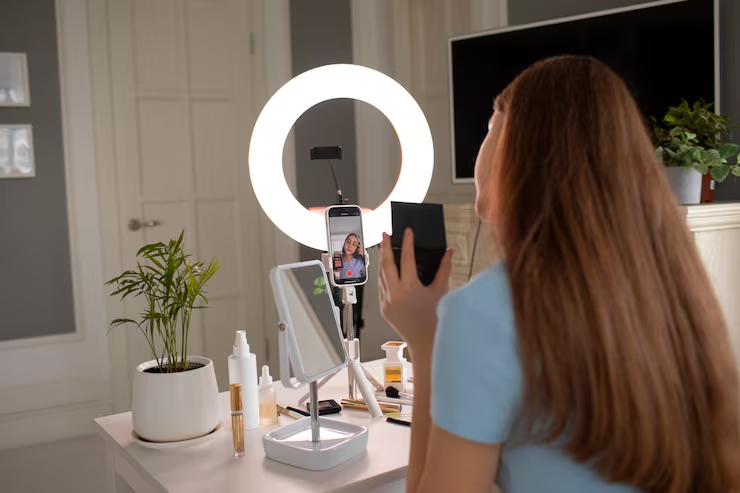
Influencer marketing has become one of the most powerful drivers of beauty product discovery across Africa. From skincare routines on TikTok to fragrance reviews on Instagram and product tutorials on YouTube, beauty influencers now occupy a central role in shaping consumer perception and purchase decisions. However, as influencer marketing matures, regulators and advertising self-regulatory bodies are increasingly clarifying that influencer content is advertising, and therefore subject to the same compliance obligations as traditional marketing.
Cosmetic product recalls represent one of the most sensitive and high-stakes crisis scenarios a beauty company may face. When safety concerns arise whether due to microbial contamination, formulation defects, ingredient safety questions, mislabelling or unexpected adverse reactions, the response by the brandowner must be immediate, disciplined and regulator-aligned. Across Africa, regulators are increasingly strengthening their oversight of product safety and exercising their powers to compel recalls where products present a risk to consumers.

The Botswana Medicines Regulatory Authority (BoMRA) has announced a significant revision to the implementation timeline for mandatory cosmetic product listing in Botswana, delaying compulsory compliance from 1 April 2026 to 31 December 2026. Mandatory listing will now formally commence from 1 January 2027, with a fee-free transition period running until 31 March 2027, after which listing fees will apply from 1 April 2027.

Botswana is rapidly moving toward a significantly more formalised cosmetic regulatory system. Through the combined introduction of the proposed Medicines and Related Substances (General) Regulations, 2025 and the Medicines and Related Substances (Fees, Levies and Penalties) Regulations, 2026, the Botswana Medicines Regulatory Authority (BoMRA) is signalling a decisive shift toward increased oversight, traceability, product visibility and regulatory cost recovery across the cosmetics sector.

Nigeria has officially adopted a national policy on cosmetics safety and health, marking a significant regulatory development for the African country's beauty industry. Supported by the World Health Organization and implemented through the National Agency for Food and Drug Administration and Control (NAFDAC), the policy establishes a coordinated national framework governing how cosmetic products are manufactured, imported, distributed, marketed and monitored across Nigeria.

The proposed Draft East African Standard for Non-Hazardous Waste Management (DEAS 1311:2025) signals an important regulatory shift for cosmetic companies operating across the East African Community (EAC). While framed as an environmental and waste management standard, the draft effectively introduces a more structured compliance framework for how businesses manage packaging waste, manufacturing waste, recyclable materials and post-consumer disposal obligations across the product lifecycle.

The South African Bureau of Standards (SABS) has proposed South Africa’s Pilot Phase 1 Pre-Verification of Conformity (PVoC) programme, with cosmetic and personal care products imported from China included within the proposed list of designated “high-risk unregulated products” requiring conformity verification against applicable South African standards before entering the market. The scheme is proposed for implementation in September 2026.

For cosmetic companies engaged in e-commerce, advertising, product claims and other digital activities, in Kenya, the Competition (Amendment) Bill, 2026, represents a fundamental shift in how digital marketplaces and supply chains may operate in future.
The Bill also sharpens the consumer protection lens, explicitly expanding offences related to false or misleading representations and omission of material product information which has a direct impact on cosmetic advertising and how it will be positioned in Kenya in the future.
This is no longer just about preventing major monopolies or market dominance; it is about the government gaining the power to intervene in the micro-conduct of businesses.

A recent ruling by the Advertising Regulatory Board (ARB) in a dispute between Beiersdorf and L'Oréal has provided valuable regulatory guidance on the use of market leadership claims and health professional endorsement claims in cosmetic advertising for science-led beauty brands.
The ruling confirms that claims such as “South Africa’s No.1 Dermatologist Recommended Brand” can be made, provided they are supported by robust, statistically significant and independently validated evidence that exists at the time the claim is published. But there is more to this than meets the eye....
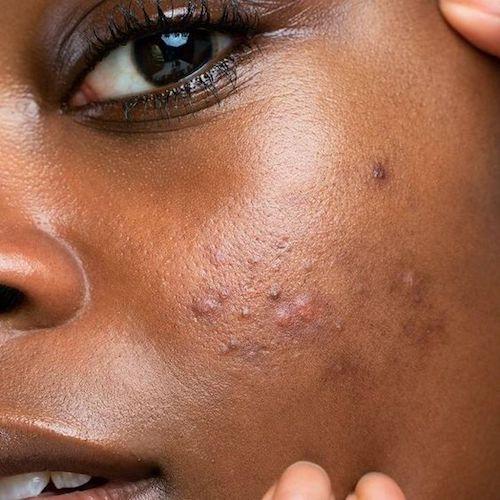
A recent ruling by the Advertising Regulatory Board (ARB) in a matter between Beiersdorf and L'Oréal has delivered an important warning to cosmetic companies operating in the increasingly blurred space between beauty, dermatology and science-led skincare. While the ARB upheld La Roche-Posay's dermatologist recommendation claims, it simultaneously found that references to "acne" in associated influencer content constituted an unacceptable medical claim for a cosmetic product and therefore breached the ARB Cosmetic Advertising Code.
The Advertising Regulatory Board’s (ARB) partial upholding of Colgate-Palmolive’s complaint against Reckitt Benckiser marks a subtle but important shift in how cosmetic advertising claims will be judged in South Africa.
At its core, the ruling reinforces a principle that many cosmetic companies' claim development and scientific valorisation teams assume, but often underestimate in practice i.e. it is not enough for a claim to be scientifically defensible; it must also land truthfully in the mind of the consumer.
The Advertising Appeals Committee (AAC) decision in the Colgate vs Haleon case represents a meaningful tightening of how leadership and dentist-endorsed claims must be communicated in cosmetic and oral care categories. While the underlying evidence supporting Sensodyne as the “#1 dentist recommended brand for sensitive teeth” was accepted, the ruling turned on a more commercially critical issue: the way the claim was presented to consumers.
In a significant development, the South African Bureau of Standards (SABS) and the Department of Trade, Industry and Competition (DTIC) have suspended the implementation of the proposed Pre-Verification of Conformity (PVoC) programme with immediate effect. The programme, which would have introduced mandatory pre-export conformity assessment requirements for certain high-risk unregulated products imported from China, including a range of cosmetic and personal care products, has been placed on hold pending further consultation with industry stakeholders, the World Trade Organization (WTO) and trading partners.
A recent ruling by the Advertising Regulatory Board (ARB) against Unilever South Africa concerning a homecare product has significant implications for cosmetic brands that are on the opposite shopping isle. Although the case concerned Sunlight Platinum dishwashing liquid, the principles established by the ARB are directly applicable to the cosmetics and personal care industry, where claims such as natural, organic, plant-based, bio-derived and clean beauty have become central to brand positioning and with established rules on how to validate and make these claims.
The countdown has entered its final phase for cosmetic companies supplying the Zambian market. On 9 September 2026, the two-year transition to compliance period granted by the Zambia Medicines Regulatory Authority (ZAMRA) concludes, marking the anticipated point at which cosmetic products placed on the Zambian market are expected to comply fully with the country's new cosmetic regulatory framework. This includes obtaining Marketing Authorisation (product registration) for cosmetics, together with the appropriate import permits for importers and distributors bringing registered products into Zambia. The deadline applies both to products already on the market during the transition period and to new products entering the market thereafter.

A recent judgment of the Federal High Court of Nigeria setting aside the ₦60 billion sanction imposed by the Advertising Regulatory Council of Nigeria (ARCON) against Facebook Nigeria has attracted considerable attention across the advertising industry. However, for cosmetic companies marketing through Facebook, Instagram and WhatsApp, the most important takeaway is not that ARCON's advertising approval regime has been weakened. Rather, the Court clarified how ARCON must exercise its powers, not whether those powers exist.
South Africa is moving towards a more connected enforcement model for illicit and non-compliant goods. The May 2026 South African Revenue Service (SARS) and National Consumer Commission (NCC) Memorandum of Understanding (MoU) established a framework for information sharing, joint investigations and coordinated enforcement, particularly around non-compliant imports, customs and tax compliance and consumer protection. The latest development takes this a step further, SARS and the NCC are planning a smartphone-enabled track-and-trace system targeted for rollout in 2028, under which consumers will be able to scan a unique barcode on participating products and obtain information about their legitimacy and supply-chain provenance.

Somewhere between a Bafana Bafana kickoff match and a Castle Lager logo, the Advertising Regulatory Board (ARB) handed influencer, brand and legal teams a masterclass in why "that's my personal social media account" is no longer a full proof get-out-of-jail card. The ruling concerns beer. The reasoning concerns every category that leans on influencers to feel authentic while still selling something, and few categories lean harder than cosmetics and personal care brands.

Beauty advertising and AI are already inseparable. Virtual try-on filters, AI-enhanced before-and-after imagery, digitally rendered skin and hair results, and increasingly, synthetic brand ambassadors, are now a standard part of how the industry sells product, in Africa as much as anywhere else. That's simply the toolkit modern beauty marketing runs on. What's changed is that as of a few weeks ago, the EU has introduced a rule that asks a very specific question of that toolkit: does this ad use AI to make something look more real, more flawless, or more capable than it actually is, and if so, has anyone told the consumer viewing the content?
A serum labelled one hundred percent natural, a compact marketed as recyclable, a fragrance calling itself carbon neutral: each of those lines is a legal claim wearing a marketing outfit, and South Africa has been testing exactly that distinction for years through Appendix G of the ARB Code of Practice. That appendix already requires environmentally friendly, green and ozone friendly to be qualified by a stated benefit rather than left to float on their own, treats absolute claims and words like free or contains no as claiming total absence unless proven otherwise, and runs its own dedicated rules for recyclable and degradable claims specifically. None of that sits with packaging development, marketing, or the sustainability team by default. It sits with whoever signs off the pack copy and the campaign brief, because the moment a claim goes to print or goes live, it becomes the brand's legal exposure, not the exposure of whichever department happened to write it.
Our serum performs five times better than our nearest rival serum, in half the time. That is a completely ordinary comparative advertising claim, the kind a market leading beauty brand runs all the time, and on its own the ARB has never had a problem with it provided the performance claim is real and the comparison is fair. What changed this year is that the exact same claim, run by the exact same market leader, can now also be read differently, as something capable of shutting a smaller competitor out of the market rather than simply outselling them, wherever that market leader can reasonably be perceived, in competition law terms, as a dominant player in its market or sector, with the rival it is measuring itself against sitting well beneath it in scale. That reading falls under competition law, not advertising law.
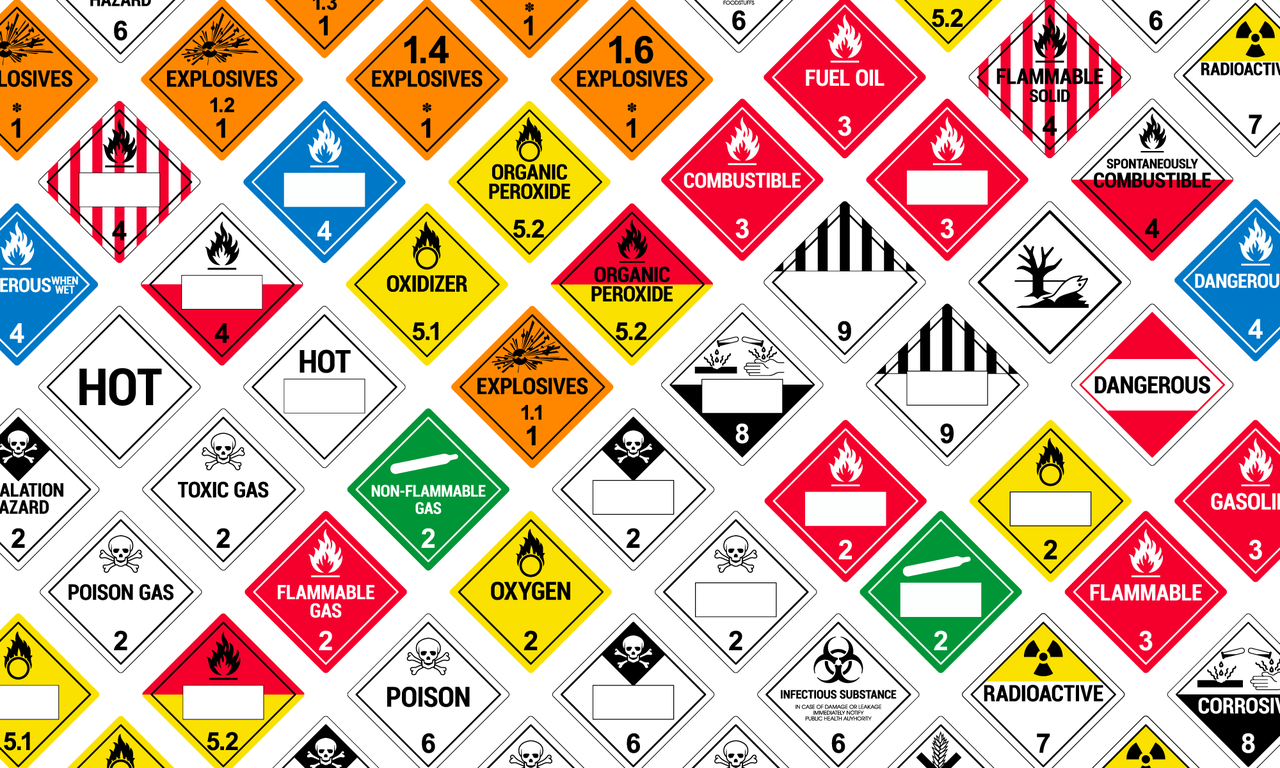
Somewhere in your raw material portfolio sits an ingredient classified as a skin sensitiser, an aerosol propellant classified for pressure hazards, or a UV filter carrying an environmental hazard statement, each with a safety data sheet and a label built around a specific set of GHS criteria. The European Commission has just proposed rewriting several of those criteria, covering skin sensitising mixtures, chemicals under pressure, and substances hazardous to the atmosphere, to bring the EU's CLP Regulation into line with the UN's more recent GHS revisions, with adoption expected before the end of 2026. Every raw material exported into the EU under those classifications will eventually need to be reassessed against the new criteria, not the ones your SDS was built on.